Saturday, June 12, 2021

Facts You Probably Didn’t Know about steel

 Steel is one of the world's most diverse and useful materials which was first created by mining iron ore from the ground, smelting it in a furnace to remove impurities, and then adding carbon. Existing steel is recycled in today's steel-making process. It is made up of iron and carbon, it is one of the most versatile alloys on the planet. It is used in a wide range of industries, including construction, transportation, rail, automotive, agriculture, and energy, etc.
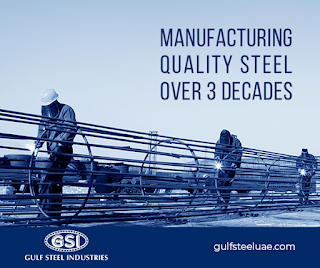
Steel Manufacturer in UAE


Steel is the most commonly used material in renewable energy delivery, such as wind, hydro, and solar power, and it can be recycled multiple times without losing its integrity. It is one of the most commonly used metals in fabrication shops because of its ability to withstand corrosion, heat, and pressure due to the presence of the inorganic compound chromium oxide.

So, what is it about steel that makes it so special? Here are fascinating steel facts you probably didn't know!

Steel is a type of alloy: It is important to know the fact that it is not pure metal because it is made up of various metals. They are primarily iron and carbon alloy. Carbon steel contains manganese, silicon alloys, and other elements that are prone to corrosion. Because alloy steel is a combination of several other metals such as copper, aluminum, and nickel, it is less expensive and widely used in mechanical industries such as pipelines and motors. As a result, there are numerous steel types available on the market and used in a variety of industries.

Steel has a higher elasticity than rubber and 1,000 times stronger than iron:  It is a material that can return to its original shape after being deformed under stress. It is approximately 1000 times stronger than iron because it is an alloy composed of iron and traces of carbon. Steel's tensile strength is significantly increased when a small amount of carbon is added to it, resulting in a stronger material.

Steel is one of the most recycled materials on the planet: Some may be surprised to learn that steel is one of the most recycled materials on the planet. The best part is that steel retains its strength when recycled. It is entirely dependent on its composition. In its purest form, steel is nearly a thousand times stronger than iron. The majority of steel products and objects are not made of new steel. They are made from recycled steel. Steel, whether used in automobiles, roofing, or appliances, can always be recycled and easily separated from other materials due to its magnetic properties.

Everything around us is made of steel: Steel objects can be found in your own home. Cabins, utensils, doorknobs, and other items, for example, are made of or contain steel. Its strength and versatility have been tested over the years that it has become a part of everyone's daily lives.

Steel is a good indicator of a strong economy: Steel, as we all know, is used in a variety of industries to construct various objects. Steel is used in everything from skyscrapers to commercial planes because it is in such high demand. If the steel industry grows, it indicates that the economy is growing as well. An increase in construction steel demand indicates that many constructions are taking place, implying that there are more buildings for commercial, residential, or industrial use. Steel, which is used in manufacturing, could also be in demand.

Gulf Steel has years of experience, honing our skills across the board to deliver CARE-approved steel and provide quality customer service to our customers. If you need high-quality steel rebars, you should get in touch with Gulf Steel.



Sunday, June 6, 2021

Tips for protecting and storing your Rebar

 Reinforcing steel comes in the form of bars that are normally tied together in a cage. The bars are available in a variety of grades and strengths, and they can be smooth or deformed. Rebar’s give the concrete structure strength and also prevents shrinkage cracking. In the construction industry, the engineers create the rebar that will be used in the structure.

The most obvious benefit of steel rebar is that it provides exceptional support to a wide range of structures. It can be found in foundations, bases, columns, and wall paneling. Single steel rebar is frequently connected with multiple rebar to form a framework that provides stability. The patterned and textured finish of the rebar is designed to strongly adhere to the concrete's composition. It is one-of-a-kind design makes it ideal for reinforcing the qualities of concrete.

Stainless rebars, carbon steel rebars, galvanized steel bars, and epoxy-coated steel bars are all types of steel reinforcement used in construction. They are of various classes and grades are commonly used in construction projects. To avoid distortion and deterioration due to corrosion, each type must be handled and stored separately.

Here are some tips for protecting and storing your rebar : 

  1. Position the rebars on a raised platform, which can be made of any non-metallic material. For example, because the ground and concrete absorb moisture, which can cause rusting, wooden pallets can be used as platforms.

  2. The rebars can be protected with a thick tarp and secured with cinder blocks at the corners and edges. The protective covering keeps the rebars from being exposed to the elements.

  3. When using galvanized rebar, avoid contact with uncoated rebar and prolonged contact with wooden materials, which can stain its surface. We recommend that you use a different type of non-metallic platform.

  4. Carbon steel rebars and other ferrous materials must be kept separate from stainless steel rebars. If space is an issue, place the stainless steel rebars above all other rebars.

  5. Corrosion in rebars can be avoided by storing them in sheds or an enclosed spaces. It should be made certain that the area is not prone to humidity, moisture, snow, or rain.

  6. The ends of the various classes of rebars should be painted differently to facilitate identification and organization. To prevent scaling and rusting, the steel reinforcement should be painted with cement wash if possible.

  7. Rebars can be stored for an extended period by stacking them at least 150 mm above ground level. It must be done with enough support so that it does not buckle, sag, or bend. To store rebars, special steel racks are now manufactured.

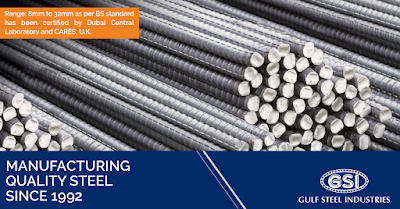
Gulf Steel was founded in 1992 and specializes in customized ready–to–use cut and bend steel. They are one of the best steel manufacturers in the UAE. If you need high-quality reinforcement steel bars, you should get in touch with Gulf Steel. In addition, they are CARE-approved steel companies in the UAE.


Thursday, May 27, 2021

What is the manufacturing process of TMT steel rebars?

 Using Thermo Mechanical Treatment, high-strength reinforcement steel bars are produced, which is commonly known as TMT Steel Rebars. These bars are widely used in the construction industry as they possess several qualities other than strength. TMT bars are in great demand in the construction world due to their unique metallurgical process that combines work hardening along with heat treatment to create robust and high strength bars from low-carbon steel. They are economically viable when compared to conventional steel bars.

Rebar Manufacturer In UAE


Thermo Mechanically Treated Steel bars are mostly used in concrete reinforcement structures, residential buildings, high-rise commercial buildings, flyovers, dams, bridges, thermal plants, industrial structures, and hydel power plants.  They are capable of withstanding heavy loads compared to normal steel and are especially known for their high tensile strength and ductility.

The manufacturing process of TMT steel rebars includes 5 steps:

  1.  Extraction of iron from its ore: Iron ore plays an important role in manufacturing the TMT bar. Under this process, raw materials such as iron ore, coke, limestone, etc. are kept in a molten state. When it is the molten stage, all these materials are treated on hot gases. The molten iron is then poured into a casting machine to be shaped into the desired shape.

  2. Heating, Rolling, and formation of reinforced bar: The steel billets are heated from 1200°C [2192 F] to 1250°C [2282 F] and are passed through a rolling mill to give shape. In the rolling mill stand, it is heated and rolled rapidly.

  3. Quenching: It forms the most crucial stage in the TMT bars manufacturing process. After the milling stand, the bars are quenched by a special water spray system. This is performed to harden the outer surface of the steel. This process benefits to increase the tensile strength, size of shrinks, and durability.

  4. Self-Tempering: Once the rebar is out of the quenching box, the core remains hot compared to the surface. The heat flows from the core and gets transferred to the outer surface of the bar. This causes the desired tempering of the outer martensitic layer into a structure called ‘tempered martensitic’. It makes the bars highly ductile.

  5. Atmospheric Cooling: This is the final step in the TMT manufacturing process. It involves laying down the bar on a cooling bed at normal temperature. When the bars are cooled down, the final structure will have a strong outer layer with a ductile core.

Gulf Steel is ranked as one of the most reputed Steel Manufacturer in UAE.  They are one of the best producers of construction steel and are a CARE-approved steel company in UAE. If you have any requirements for good quality Thermo Mechanically Treated Steel bars, contact Gulf Steel.


Monday, May 10, 2021

Functions of Rebar in Construction World

 Rebars (also known as Reinforcement Steel Bars) are used extensively in the construction industry for residential and commercial projects, bridges, and several other projects like dams, canals, highways, etc. Rebar is used to improve the tensile strength of the concrete since concrete is very weak in tension and strong in compression. Considering this, the construction sector has implemented the use of rebars to strengthen concrete such as beams and slabs, and this supplements strength of concrete in columns and walls. Rebar makes concrete several times more resistant to failure.

CARES Approved  Construction Steel


Concrete is sufficiently strong to compression forces by nature, but tension forces can crack it. Rebars are used to help concrete withstand tension forces as it significantly increases the strength of the structure. Rebar is a regular steel bar that is hot rolled and is used as a part of the construction business, particularly for concrete support. Its surface is often deformed to promote a better bond with the concrete. There are different kinds of rebars like carbon steel rebar, glass- fiber reinforced rebar (GFRP), stainless steel rebar, etc.  It is much better for gaining strength and safer in the construction industry.

The combination of steel and concrete helps to create a building material that is far stronger and more flexible than either would be alone. Rebar comes in a wide range of sizes, most commonly from 6mm up to nearly 60mm. When you have larger structures, the thicker types are used as they can support heavier loads. The functions of rebar are:

  • It has ribs that bind it mechanically to solid for better holding of the structure.

  • The common rebar is made of incomplete tempered steel which makes it helpless to rusting.

  • Polymer rebar is used in a highly corrosive environment.

  • Rebar is usually combined with other steel products and reformed to gain extra strength.

  • Coastal regions use galvanized rebar to prolong the life of rebar. Reinforcement Steel Bars are also used in regions where the earth is destructive to give no consumption toughness to the development.

Gulf Steel is ranked as one of the most reputed reinforcement steel bar supplier in abu dhabi.  They are a leading steel supplier in the UAE that supplies steel products as per industry specifications and dimensions, all of which are customized as per the client’s requirement.


Saturday, April 17, 2021

What are steel bars? What are their uses?

 Steel plays a very significant role in the modern development of any industry. It is used for every structural purpose, from houses to machines, tools to roofing. In the construction industry, steel is the basis of design for skyscrapers and modern housing. Steel bars are also known as reinforcing or rebars. It is a mesh of steel wire used to reinforce concrete and masonry structures to strengthen the base material. They are widely used in construction projects to add support and strength. Apart from the construction industry, steel bars are also used in the military industry (for equipment), paper industry, shipbuilding industry, and many other architectural-related industries.

Steel bars usually have different shapes like flat, round, hexagonal, and square and mostly, it’s the form of the bar that defines its application space. Steel bars applications and utilizations depend on the kind of bars required. The primary use of these bars is to give and add another layer of reinforcement to concrete structures. These steel bars are strong and affordable. The secondary use of steel bars is for durability and to add aesthetic value.

Steel bars generally have different shapes so the utilization of these bars rely on the shape and the size of the steel bar.  The main uses of steel bars are:

  • Flat bars are thick, hot rolled, high strength, and corrosion resistance. They are used in construction industries in the form of base plates and brackets.
  • Round bars play a very important role in the machining industry. The specialty of round bars is to create machine parts and automotive components. Because of the fabulous property of corrosion resistance, these bars are indulged in the production of fasteners, machinery, and grills.
  • Steel bars are also used in underground pipelines to distribute water to different houses and also to distribute gas. They are used in power stations and pumping houses 
  • Steel roofing can deliver excellent value in terms of space, looks, reliability, and even energy saving. They help in redesigning your homes by adding upper value to modern homes, extensions, renovations, and much more. They have modern colors and are cost-efficient. 

Gulf Steel is ranked as one of the most reputed rebar exporters in the UAE.  They are a leading steel suppliers in UAE that supplies steel products as per industry specifications and dimensions, all of which are customized as per the client demand.

Thursday, April 15, 2021

Differences between Carbon Steel and Stainless Steel

 Steel is one of the most widely used materials for infrastructure, transport, packaging, and consumer durable industries. It is found in all kinds of products from aerospace to kitchenware. 

Its incredible durability and versatility make it useful; in everything and you will find it everywhere you look and in many industries. The broad two categories of steel are carbon steel and stainless steel. Both metals are used in commercial and consumer applications.

Carbon steel and stainless steel have the same basic ingredients of iron and carbon. Their main difference is alloy content—carbon steel has under 10.5 percent alloy content, while stainless steel must contain 10.5 percent chromium or more. Whenever selecting any type of steel for your project, it is important to know the grades of the steel to make the correct decision. So, this article will help you to understand the difference between carbon and stainless steel:

  • Corrosion Resistance: One of the most important differences between carbon steel and stainless steel is the ability to resist corrosion. Stainless steel resists more corrosion than carbon steel. Both the metals contain iron which oxidizes when exposed to the environment which creates rust. Metals that can resist corrosion, usually have a protective layer that prevents them from oxidation reactions. However, stainless steel has added chromium which attaches to the oxygen more easily than iron and creates an oxidized layer that protects from degradation. So, if corrosion resistance is important for your project, stainless steel is the best option.

  • Mechanical Properties: It is difficult to state the differences in mechanical properties between carbon steel and stainless steel. They have many different types and grades for each steel. Stainless steel has a large amount of nickel so it is more flexible than carbon steel. There are breakable grades of steel as well, which is called martensitic grade. The tensile strength of carbon steel cannot match the stainless steel due to the very low amount of carbon in carbon steel.

  • Appearance: If your project requires an aesthetic appeal, the appearance of the metal must be considered.  The appearance of the metal can play a very important role in crafting the environment you are looking for. Carbon steel appears dull with a matte finish while stainless steel appears to be glossier and it comes in various grades. Though both can be polished to have a bright and shiny look, carbon steel requires a clear coat of paint after polishing to avoid rust.

  • Cost Implications: Whenever you are choosing any type of steel for your project, budget plays a vital role. Although different grades have different costs, stainless steel is more expensive than carbon steel because of the additional alloying elements in it. Stainless steel includes chromium, nickel, manganese, and others while carbon steel is composed of iron and carbon elements. So if you have a tight budget for your project, carbon steel is likely the better option.

Gulf Steel has years of experience, honing our skills across the board to deliver DCL-approved steel and provide quality customer service to our customers. They are one of the best producers of steel and also CARE-approved steel companies in UAE. If you have any requirements for good quality steel bars then you should contact Gulf Steel. 


Monday, March 15, 2021

Best Practices to Follow for Steel Reinforcement

 Steel has proved itself to be an ideal material for the construction industry across the globe. When it is heated, it will expand or contract. You will have to cut and bend steel so that it forms a shape and can improve the structure of any project.  Reinforcing steel helps to improve the strength of the concrete and limits cracking by the support of it.


Steel reinforcement is a kind of concrete where you can embed steel in it. A lot of construction firms are using steel-reinforced concrete because it makes their work easy, flexible, and better.


Below are some best practices that you can follow for reinforcement steel bars:


  • Material procurement: Whenever you use any kind of material like black-bar, welded wire fabric, etc. you need to ensure that they meet the safety standards. These standards assure that good quality of the material is used in reinforced concrete products.

  • Storage: All the materials should be stored elevated from the ground - preferably in racks where it supports reinforcement and prevents contaminants.  Always prevent it from sun, rain, snow and ice so that it is protected from weathering and oxidation of steel before use in any project.

  • Fabrication:  All the reinforced steel must be fabricated according to the guidelines. Carefully measure, cut, and bend to ensure accuracy. If you are bending or cutting the steel in cold weather then it needs to preheat to prevent it from cracking.

  • Repair damage and look for warning signs: If any damage is seen then it should be repaired using an appropriate patching material with the material manufacturer’s confirmation. Double-check it and see if there are any small cracks. Always check the steel temperature and ambient temperature to discard any compromised reinforcement.

  • Approved variation: If any changes are done with the variation or size then it has to be approved by the plant personnel. You cannot use larger sizes or change them without approval because it will not build a stronger structure.


Gulf Steel is ranked as one of the most reputed
rebar manufacturers in the UAE. Led by a strong team, the company focuses on technological excellence geared towards the production of high-quality steel products.

How to bend rebar?

  Listed below are some ways to bend rebar: Bend Rebar by Hand (Pipe) Bending rebar by hand, or manually bending it, is the most fundamental...